 Klearchos Kapoutsis · CC BY 2.0
 Why visit
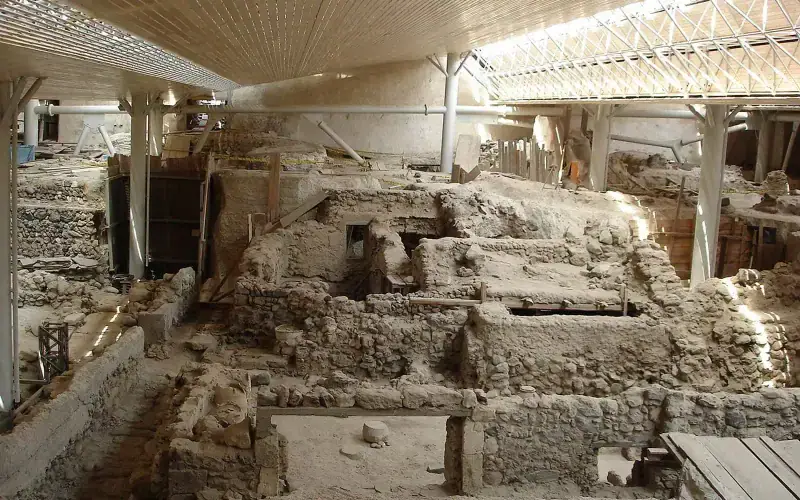
Bronze Age town preserved beneath volcanic ash on Santorini, with streets, multi-storey buildings and traces of wall paintings. Akrotiri flourished during the Aegean Bronze Age until the great volcanic eruption in the second millennium BCE buried the settlement in ash. Excavations begun in the twentieth century revealed a sophisticated urban community and exceptionally preserved architecture. The visit is strongest when you focus on covered excavation streets, multi-storey buildings and minoan-influenced urban remains.
What you will see
- Covered excavation streets.
- Multi-storey buildings.
- Minoan-influenced urban remains.
History
Akrotiri flourished during the Aegean Bronze Age until the great volcanic eruption in the second millennium BCE buried the settlement in ash. Excavations begun in the twentieth century revealed a sophisticated urban community and exceptionally preserved architecture.
Photographs
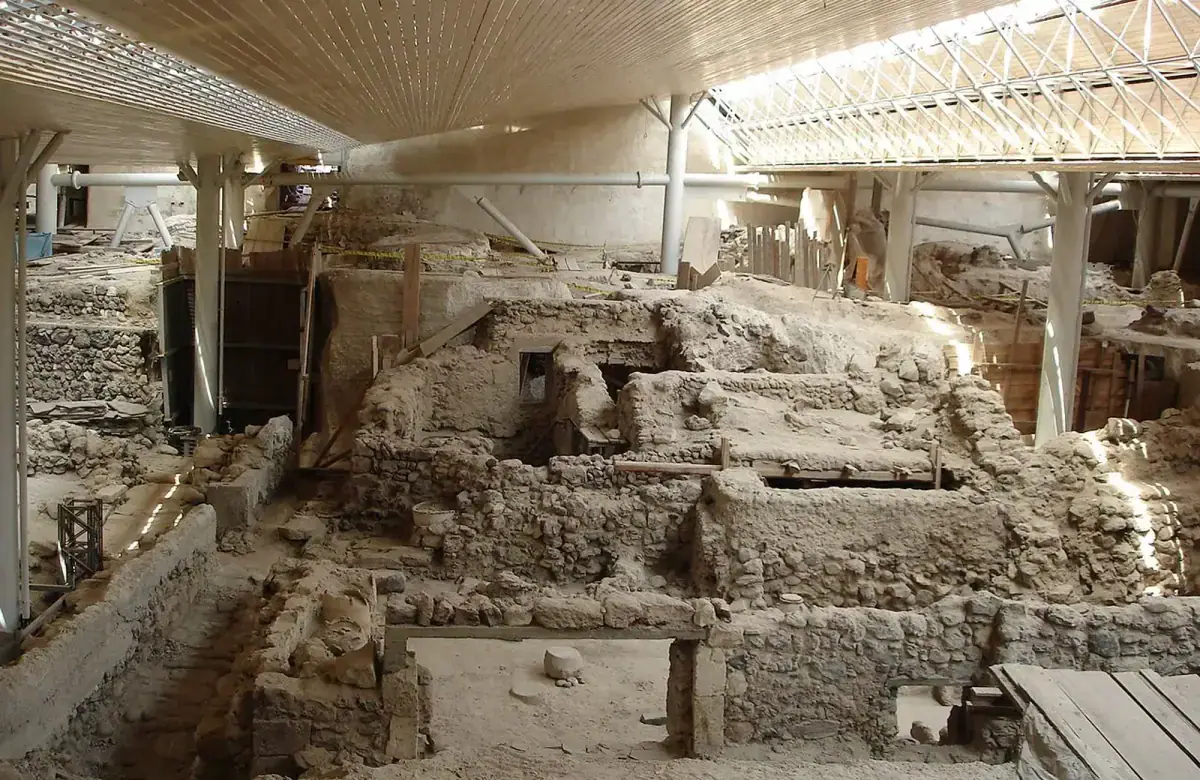
Klearchos Kapoutsis · CC BY 2.0 · full attribution on the image credits page.
Visitor tips
- 1
Prioritise Covered excavation streets if you have less time than the full suggested visit.
- 2
Leave enough time for Multi-storey buildings rather than treating Akrotiri Archaeological Site as a quick photo stop.
- 3
Check the current island transport or ferry plan before fixing the day around Santorini; seasonal services and final local connections can change.
About South Aegean
Cycladic settlements, volcanic landscapes, sacred Delos and major Dodecanese medieval and ancient sites.
Open the Greece guide