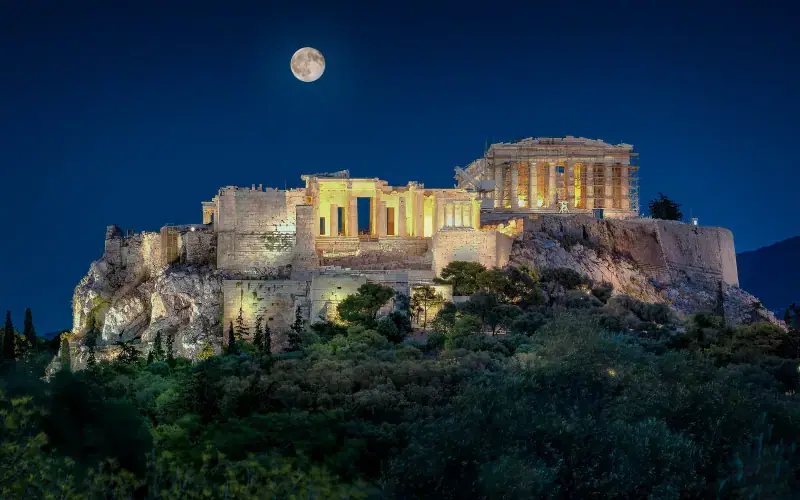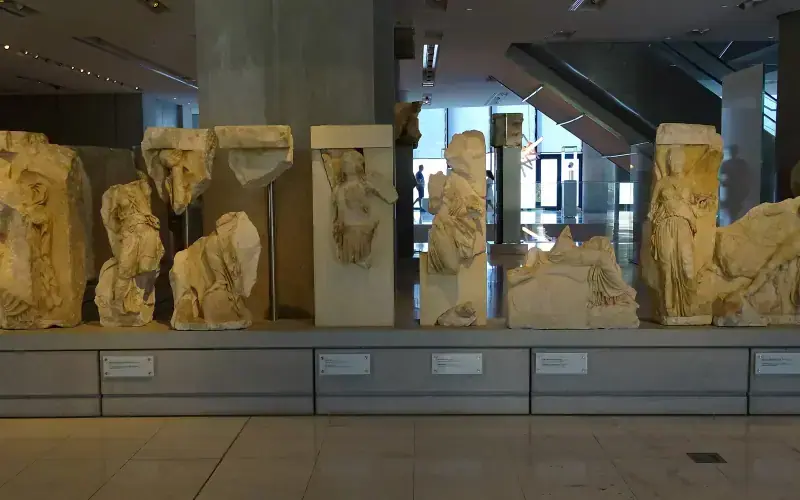
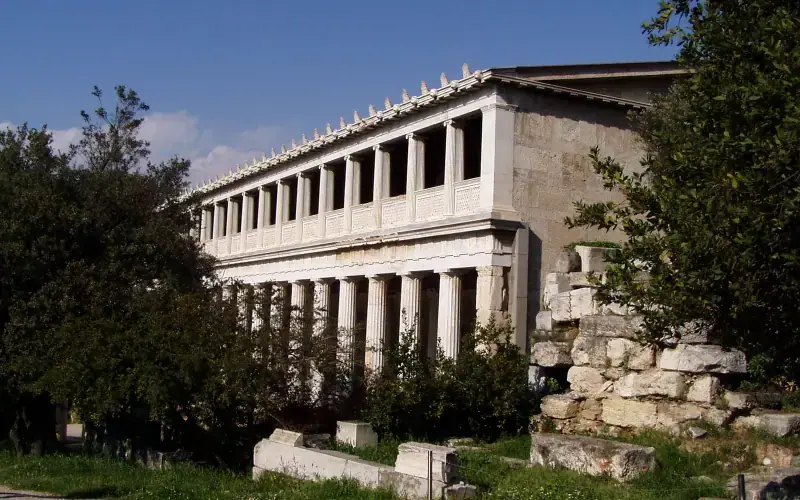
 DerHexer · CC BY-SA 3.0
 Why visit
The civic and commercial heart of ancient Athens, with temples, public buildings and the reconstructed Stoa of Attalos. The Agora developed from the sixth century BCE as the centre of Athenian civic life. Assemblies, courts, markets and religious processions met here, and philosophers including Socrates moved through the public spaces; Roman and later phases reshaped parts of the site. The visit is strongest when you focus on temple of hephaestus, stoa of attalos and panathenaic way.
What you will see
- Temple of Hephaestus.
- Stoa of Attalos.
- Panathenaic Way.
History
The Agora developed from the sixth century BCE as the centre of Athenian civic life. Assemblies, courts, markets and religious processions met here, and philosophers including Socrates moved through the public spaces; Roman and later phases reshaped parts of the site.
Photographs
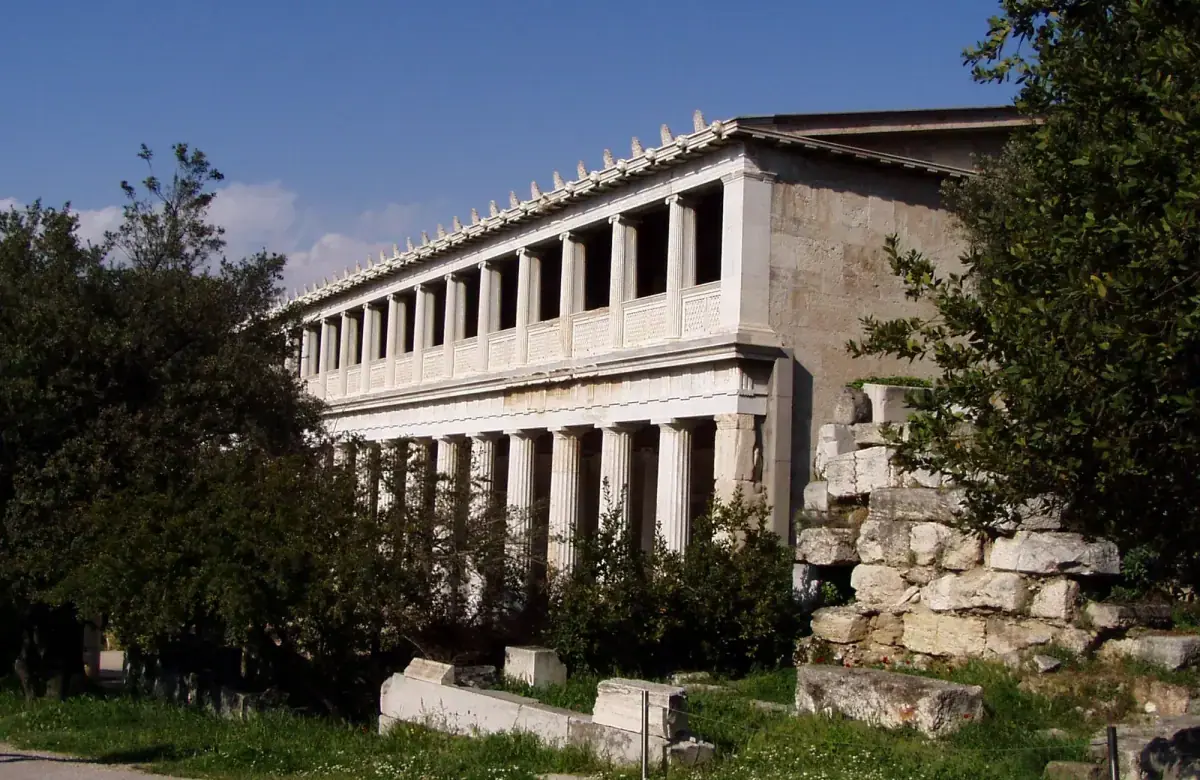
DerHexer · CC BY-SA 3.0 · full attribution on the image credits page.
Visitor tips
- 1
Prioritise Temple of Hephaestus if you have less time than the full suggested visit.
- 2
Leave enough time for Stoa of Attalos rather than treating Ancient Agora of Athens as a quick photo stop.
About Attica
Athens and the surrounding peninsula, including Saronic island heritage, major museums and coastal archaeology.
Open the Greece guide