 Mike Peel · CC BY-SA 4.0
 Why visit
Hampton Court Palace is worth allowing time for because it combines state rooms, architecture and the political or social history attached to a major residence. The site is more useful than a quick photograph: its surviving features give clear evidence of how the place developed and how people used it. Key things to concentrate on are principal state or historic rooms, exterior architecture and landscaped setting, formal or botanical planting and contrasting garden and parkland areas. Its position in or near East Molesey also makes it a practical anchor for exploring the surrounding region without reducing the visit to a simple landmark stop.
What you will see
- principal state or historic rooms.
- exterior architecture and landscaped setting.
- formal or botanical planting.
- contrasting garden and parkland areas.
History
Cardinal Thomas Wolsey began Hampton Court in the early 16th century; Henry VIII took possession in 1529. William III and Mary II later commissioned major Baroque additions by Christopher Wren.
Photographs
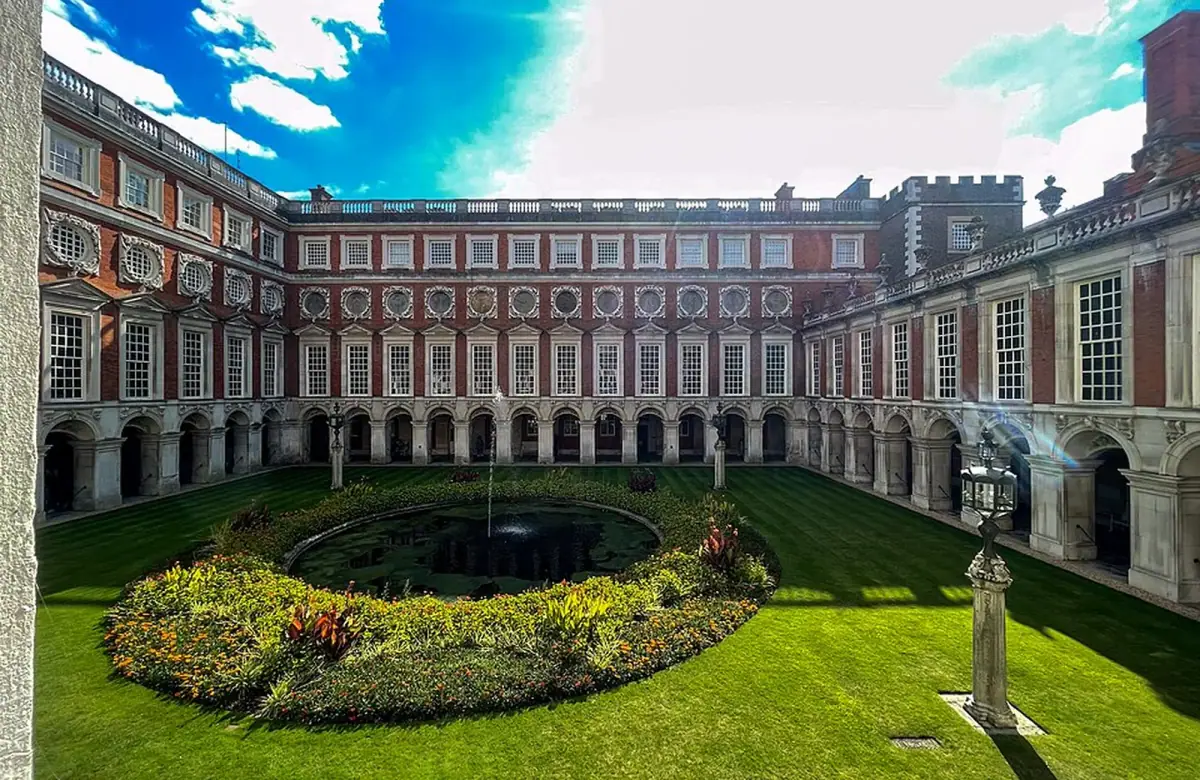
Mike Peel · CC BY-SA 4.0 · full attribution on the image credits page.
Visitor tips
- 1
Allow enough time for the principal features rather than treating the stop only as a photograph.
- 2
Check the official visitor page shortly before travel for access, booking and any temporary restrictions.
About London
London’s historic, civic, museum and royal districts, with dense public transport and many major sights within short urban journeys.
Open the United Kingdom guide