 Johan Jönsson (Julle) · CC BY-SA 4.0
 Why visit
Kivik’s King’s Grave stands out because the scale of the cairn and the carved stone slabs can be considered together. The monument demonstrates the labour invested in high-status burial during the Bronze Age, while the imagery inside the cist opens questions about ritual, travel, animals and social display. The site is not a royal grave in the later historical sense, despite its traditional name. A careful visit benefits from looking at the structure of the mound as well as the carved motifs, placing the monument within the wider prehistoric landscape of eastern Skåne rather than viewing it as an isolated object.
What you will see
- the large stone cairn.
- the cist with carved Bronze Age slabs.
- interpretation of ships, figures and symbolic motifs.
History
The cairn was created during the Nordic Bronze Age. It was disturbed and opened in the 18th century, after which the decorated slabs became central to archaeological study and later conservation of the monument.
Photographs
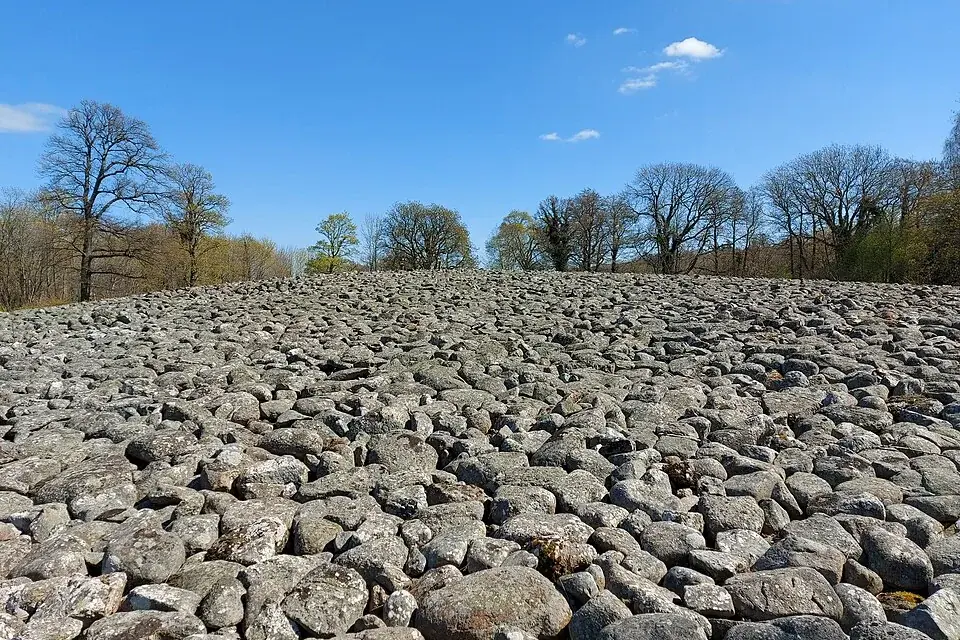
Johan Jönsson (Julle) · CC BY-SA 4.0 · full attribution on the image credits page.
Visitor tips
- 1
Check the official source shortly before travel for current access and visitor arrangements.
- 2
the large stone cairn is a useful first reference point for understanding the site.
About Skåne
Sweden’s southernmost region offers medieval Lund and Ystad, Malmö’s fortress heritage, designed gardens and a varied coast of cliffs, beaches and wooded national park landscapes.
Open the Sweden guide