 Milan Paunović · CC BY-SA 4.0
 Why visit
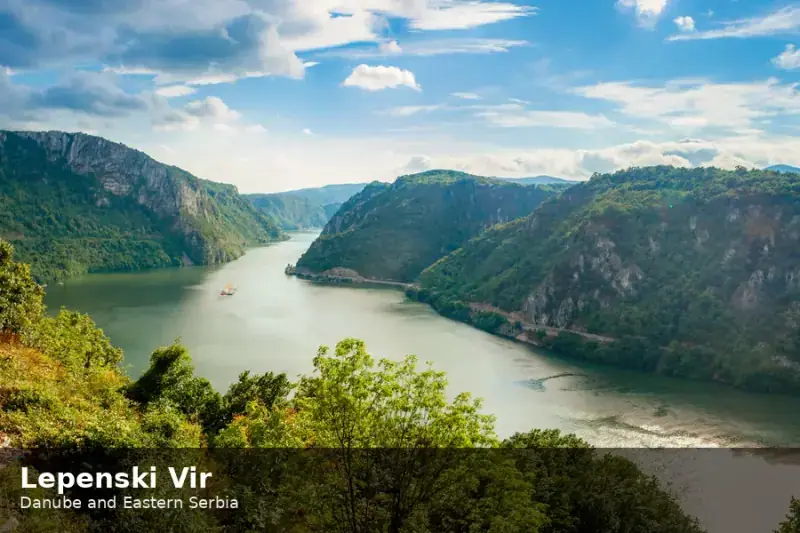
Lepenski Vir is worth including in a Serbia itinerary for its direct connection with surviving structures and archaeological evidence that make an earlier settlement legible on the ground. The main visit can be organised around excavated structures, site interpretation, relationship to the surrounding historic landscape. These elements make the site useful for understanding the wider Donji Milanovac area rather than treating it only as a photo stop. Its physical setting also helps explain how transport routes, faith, political power, geology or local livelihoods influenced this part of Serbia. A measured visit leaves enough time to read the surviving fabric or landscape and then connect it with nearby places from the same region.
What you will see
- excavated structures.
- site interpretation.
- relationship to the surrounding historic landscape.
History
Lepenski Vir preserves evidence of Mesolithic and early Neolithic communities along the Danube. Its distinctive trapezoidal house plans and stone sculpture transformed understanding of early settlement in the region.
Visitor tips
- 1
Confirm the current public entrance or trailhead before departure.
- 2
Allow extra time for parking, steep approaches, security, queues or weather where relevant.
- 3
Respect worship, conservation, protected-landscape and photography rules shown on site.
About Danube and Eastern Serbia
Eastern Serbia follows the Danube through the Iron Gates and extends inland to Roman archaeology, medieval fortresses, karst caves and distinctive mountain landscapes.
Open the Serbia guide