 Neighbor’s goat · CC BY-SA 4.0
 Why visit
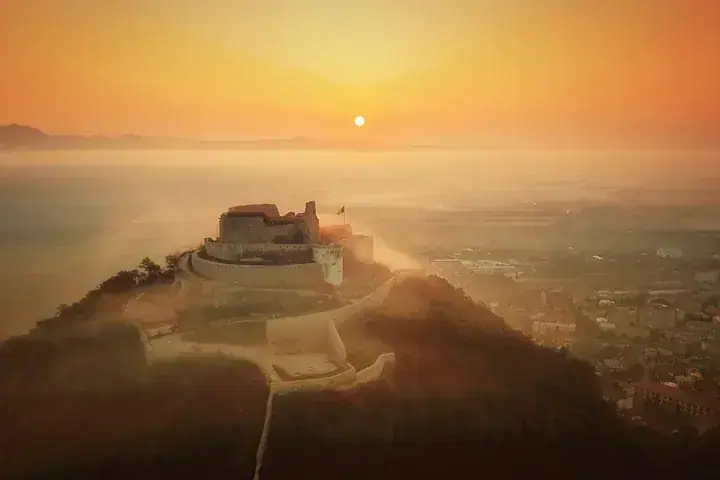
Deva Fortress gives a focused view of Romania’s architectural and historical development. The site is distinctive because its surviving fabric and setting can be read directly rather than only through museum interpretation. A visit works well as part of a regional itinerary around Deva, while still rewarding enough time to examine the main structures, landscape features and historical context at an unhurried pace.
What you will see
- The principal fortress features of Deva Fortress.
- The relationship between the site and its surrounding town or landscape.
- Details that reveal the place’s historical or geological development.
History
The fortress occupies a volcanic hill above Deva and was repeatedly expanded from the medieval period as control of Transylvania changed between regional powers.
Visitor tips
- 1
Confirm the final public entrance, parking point, trailhead or ticket office before departure.
- 2
Allow extra time for historic-centre traffic, mountain roads, steep paths or queues where relevant.
- 3
Respect active places of worship, protected landscapes, private property and any photography restrictions.
About Central Transylvania and Hunedoara
Alba, Hunedoara and the Orăștie Mountains hold Roman remains, Dacian sites, medieval fortresses and some of the country’s most substantial castle architecture.
Open the Romania guide