 Marcin Konsek · CC BY-SA
 Why visit
Choose Heraclea Lyncestis because it gives the Bitola and Pelister area a specific, recognisable experience rather than a generic map stop. A major ancient city site noted for its theatre and early Christian mosaics. The recommended 120-minute allowance covers the core visit, orientation and a realistic margin for interpretation, photographs or a rest. It works best when grouped with nearby places around Bitola so the trip avoids repeated parking searches, unnecessary valley crossings or rushed mountain transfers.
What you will see
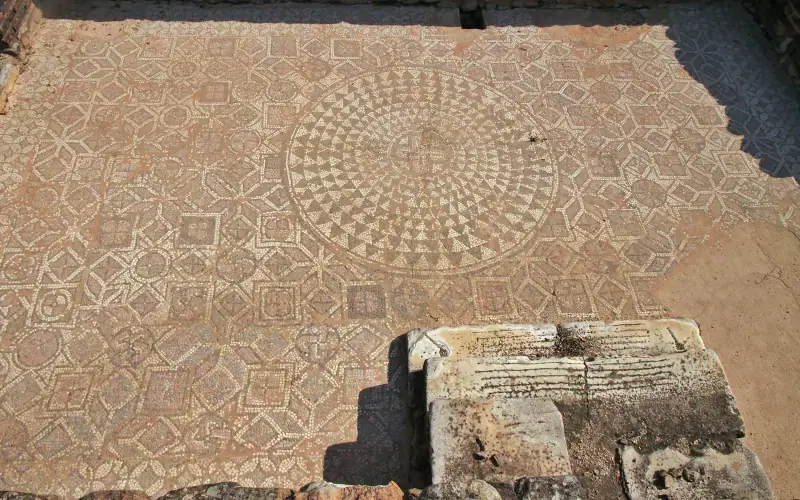
- Mosaic basilicas.
- Roman theatre.
- ancient street.
History
Founded in the Hellenistic period and expanded under Roman rule, Heraclea became an important station on the Via Egnatia. North Macedonia’s visitor story is layered: prehistoric communities, Paeonian and ancient Macedonian centres, Roman roads, Byzantine and medieval churches, Ottoman towns, the Ilinden period, Yugoslav modernisation and independence affected different places in different ways.
Visitor tips
- 1
Allow about 120 minutes for the core experience and add margin for heat, traffic, border roads, parking, steep streets, boat loading or mountain weather as relevant.
- 2
Check the official same-week information for opening, restoration, worship, event, fire, snow, water-level, trail or protected-area restrictions.
- 3
Carry water, sun protection and footwear suited to cobbles, polished church floors, archaeological ground, forest steps or exposed rock as relevant.
- 4
Respect active worship, memorials, village homes, agricultural land, protected wildlife and photography restrictions.
- 5
Keep a flexible alternative in the same region because mountain weather, wildfire restrictions, lake wind, winter access and small-venue staffing can change a day.
About Bitola and Pelister
Consular-era boulevards, Ottoman heritage, Roman Heraclea and the country’s oldest national park.
Open the North Macedonia guide