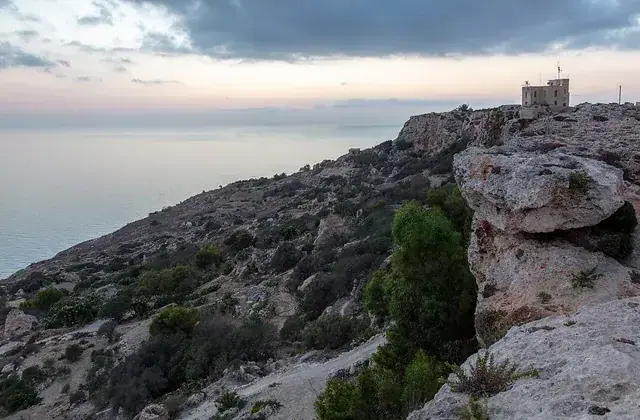
 John Cummings · CC BY-SA 4.0
 Why visit
Blue Grotto provides a focused way to understand the marine erosion and limestone scenery of Malta’s south coast. A natural arch, sea caves and intensely coloured water form a compact coastal landscape that contrasts with the nearby temple sites, while viewpoints above the inlet show the scale of the cliffs and offshore rock forms. Its value lies in the combination of surviving fabric, setting and interpretation, which places the site within the wider history of Malta and the central Mediterranean. Allowing time to examine the details rather than treating it as a brief photo stop gives context that is difficult to gain from the exterior or landscape alone.
What you will see
- natural limestone arch.
- sea caves below the cliffs.
- coastal viewpoints around Wied iż-Żurrieq.
History
The caves and arch are natural features created by marine erosion in Malta’s limestone coast. The English name Blue Grotto became established in the twentieth century and the area developed into one of the south coast’s principal excursion points.
Visitor tips
- 1
Pairing Blue Grotto with nearby places in the same region can reduce backtracking, but current access and transport arrangements should be checked on the day.
About South-west Coast
High limestone edges, sea caves and open coastal viewpoints define the south-western shore, with landscapes that are strongly exposed to changing weather.
Open the Malta guide