 Bellina 09 · CC BY-SA 4.0
 Why visit
Palazzo Falson provides a focused way to understand the scale and atmosphere of a historic Mdina residence rather than a state building. Rooms filled with furniture, paintings, silver, books and other collections show how layers of domestic use accumulated within one of the city’s old palazzi. Its value lies in the combination of surviving fabric, setting and interpretation, which places the site within the wider history of Malta and the central Mediterranean. Allowing time to examine the details rather than treating it as a brief photo stop gives context that is difficult to gain from the exterior or landscape alone.
What you will see
- historic domestic rooms.
- Gollcher art and decorative-arts collections.
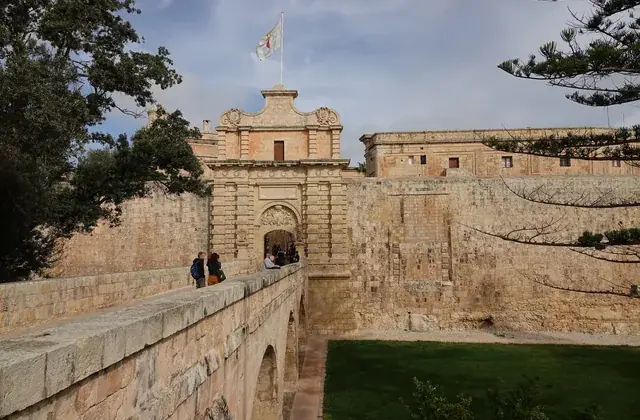
- Mdina courtyard and stone architecture.
History
The house incorporates medieval fabric and later alterations and is associated with the noble families who occupied it over several centuries. In the twentieth century it became the home and collection of Olof Frederick Gollcher before opening as a museum.
Visitor tips
- 1
Pairing Palazzo Falson with nearby places in the same region can reduce backtracking, but current access and transport arrangements should be checked on the day.
About Mdina and Rabat
Malta’s old inland capital and neighbouring Rabat bring together medieval streets, cathedral architecture, Roman remains and extensive early Christian burial sites.
Open the Malta guide