 Nenea hartia · CC BY-SA 4.0
 Why visit
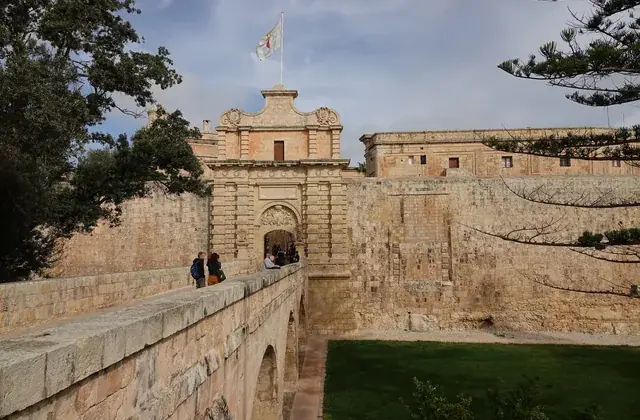
Mdina Gate provides a focused way to understand the ceremonial entrance and Baroque remodelling of Malta’s old fortified capital. The gate creates a clear transition from the outer ditch into Mdina’s quiet street network, and its sculpted façade gives a concise introduction to the city’s eighteenth-century rebuilding. Its value lies in the combination of surviving fabric, setting and interpretation, which places the site within the wider history of Malta and the central Mediterranean. Allowing time to examine the details rather than treating it as a brief photo stop gives context that is difficult to gain from the exterior or landscape alone.
What you will see
- Baroque stone façade.
- bridge across the defensive ditch.
- view into Mdina’s main approach.
History
The present main gate was built in 1724 during the rule of Grand Master António Manoel de Vilhena, replacing an earlier entrance as part of a broader programme of Baroque improvements to Mdina’s fortifications and public architecture.
Visitor tips
- 1
Pairing Mdina Gate with nearby places in the same region can reduce backtracking, but current access and transport arrangements should be checked on the day.
About Mdina and Rabat
Malta’s old inland capital and neighbouring Rabat bring together medieval streets, cathedral architecture, Roman remains and extensive early Christian burial sites.
Open the Malta guide