 Raimond Spekking · CC BY-SA 4.0
 Why visit
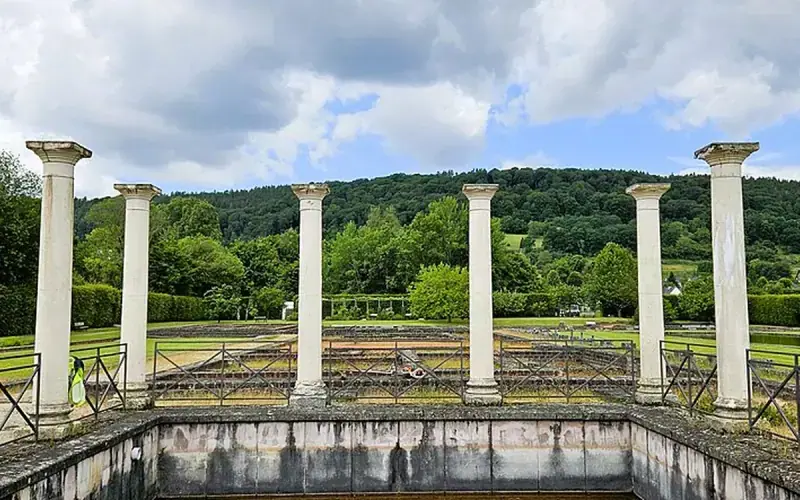
The basilica is central to understanding why Echternach became one of Luxembourg’s most important historic towns. Its Romanesque form recalls the medieval abbey founded around the cult and mission of Saint Willibrord, while the crypt and surrounding monastic quarter connect the church to centuries of pilgrimage and scholarship. The building also carries visible twentieth-century history because severe wartime damage required major reconstruction. A visit works particularly well with the nearby Roman villa, placing the town’s Christian development beside evidence of the much earlier Roman landscape.
What you will see
- Romanesque nave and towers.
- Crypt associated with Saint Willibrord.
- Former abbey setting.
- Reconstructed post-war architecture.
History
The present basilica largely reflects an eleventh-century Romanesque church built for Echternach Abbey, whose origins go back to Saint Willibrord’s foundation in the late seventh century. The church was altered over many centuries and suffered heavy damage during the Second World War. Post-war reconstruction restored its Romanesque character and the building was later designated a basilica.
Visitor tips
- 1
Allow time for the surrounding streets, landscape or historic setting where these form part of the place context.
- 2
Check current official information before relying on a particular entrance, interior visit, tour, parking area, path or transport connection.
About Müllerthal and Echternach
Eastern Luxembourg combines sandstone gorges and waterfalls with medieval castles, Echternach’s abbey heritage and substantial Roman archaeology.
Open the Luxembourg guide