 Asurnipal · CC BY-SA 4.0
 Why visit
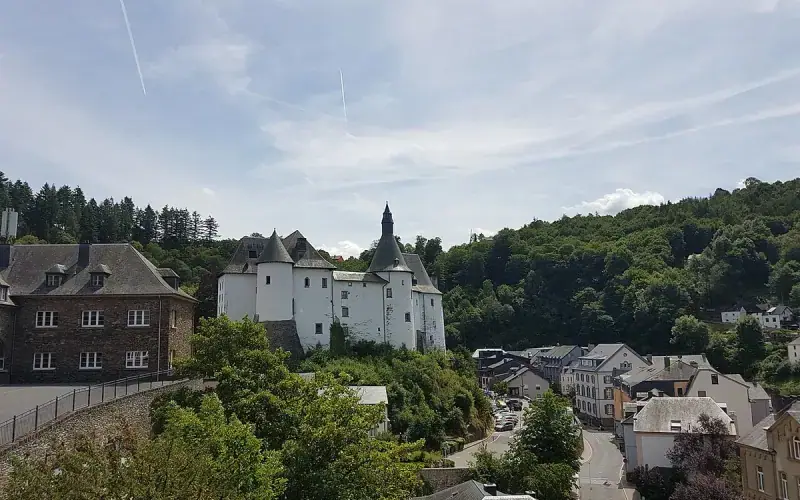
Clervaux Abbey provides a calm counterpoint to the castle and museums below. The Romanesque Revival church and monastic buildings occupy a wooded hillside, giving the complex a deliberately secluded relationship with the town. The abbey remains a religious community, so the visit is best understood around the church, exterior architecture and landscape rather than assuming broad access to monastic areas. Its position also offers a strong sense of Clervaux’s geography: castle, town and abbey occupy separate levels within a narrow Ardennes valley.
What you will see
- Romanesque Revival abbey church.
- Monastic complex on a wooded ridge.
- Views towards Clervaux valley.
- Active Benedictine religious setting.
History
The Benedictine abbey was founded in the early twentieth century, with the community established at Clervaux in 1909. The complex was created in a Romanesque Revival architectural language and developed as an active monastery rather than a converted medieval ruin. It continues to serve a Benedictine community dedicated to religious life.
Visitor tips
- 1
Allow time for the surrounding streets, landscape or historic setting where these form part of the place context.
- 2
Check current official information before relying on a particular entrance, interior visit, tour, parking area, path or transport connection.
About Clervaux and Northern Ardennes
Clervaux sits amid the wooded Ardennes, where a reconstructed castle, internationally recognised photography and a Benedictine abbey form the main cultural focus.
Open the Luxembourg guide