 Dguendel · CC BY 3.0
 Why visit
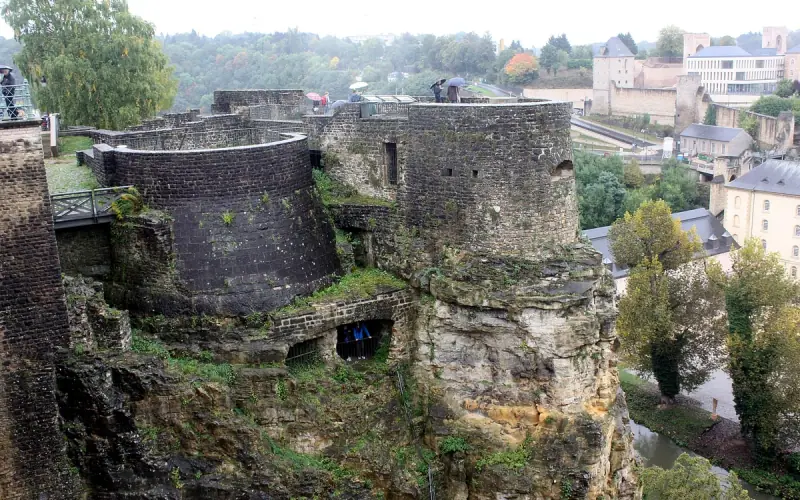
The Chemin de la Corniche is one of the clearest ways to understand why Luxembourg became such a formidable fortress. The promenade follows the edge of the upper city, with the Alzette valley dropping sharply below and layers of walls, houses, bridges and church towers visible across the slopes. It is not simply a viewpoint: walking the route connects the Bock with the judicial and old-town areas while repeatedly revealing how civilian neighbourhoods grew around defensive terrain. The path is particularly useful for orientating the capital before exploring the Grund at river level.
What you will see
- Views across the Grund.
- Former rampart line.
- Neimënster and Alzette valley panorama.
- Connections towards the Bock and old town.
History
The promenade follows sections of former fortress ramparts overlooking the Alzette valley. Luxembourg’s defensive works were repeatedly rebuilt by different European powers before extensive dismantling began after the 1867 Treaty of London. Surviving walls and the old urban layout now form part of the UNESCO-listed old quarters and fortifications.
Visitor tips
- 1
Allow time for the surrounding streets, landscape or historic setting where these form part of the place context.
- 2
Check current official information before relying on a particular entrance, interior visit, tour, parking area, path or transport connection.
About Luxembourg City
The capital brings together the old fortress, major national museums, civic architecture, the Alzette valleys and several of the country’s most important memorial sites.
Open the Luxembourg guide