 Langhorns · CC BY-SA 3.0
 Why visit
Notre-Dame Cathedral brings together several strands of Luxembourg’s religious and national history in one central building. The interior combines late Gothic visual language with later additions, while the crypt and memorial associations connect the church to the ruling dynasty and national ceremonies. Its position between the old town, government quarter and Constitution Square makes it easy to place within a wider city walk. The cathedral is also useful for understanding how a Jesuit foundation evolved into the principal Roman Catholic church of the Grand Duchy.
What you will see
- Seventeenth-century church fabric.
- Cathedral nave and stained glass.
- Crypt and dynastic memorial context.
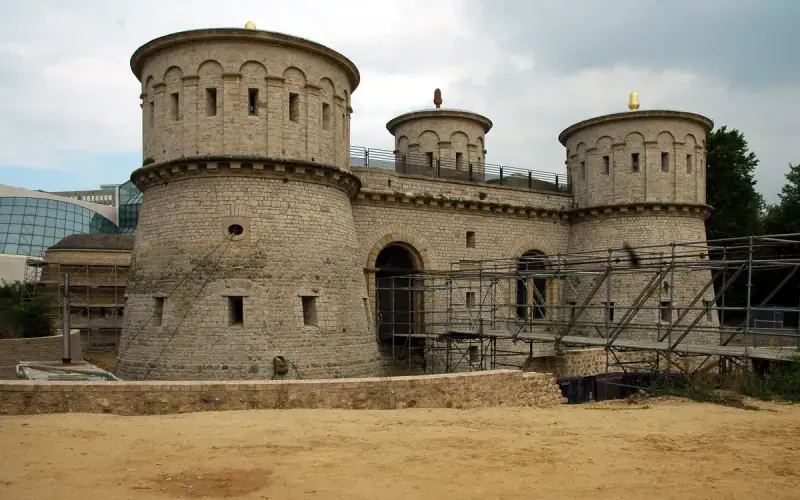
- Three-tower city silhouette.
History
The church was built by the Jesuits between 1613 and 1621. It became the parish church of Notre-Dame in the eighteenth century and was designated a cathedral when the Diocese of Luxembourg was established in 1870. Major enlargement in the 1930s altered the exterior while preserving important parts of the earlier church.
Visitor tips
- 1
Allow time for the surrounding streets, landscape or historic setting where these form part of the place context.
- 2
Check current official information before relying on a particular entrance, interior visit, tour, parking area, path or transport connection.
About Luxembourg City
The capital brings together the old fortress, major national museums, civic architecture, the Alzette valleys and several of the country’s most important memorial sites.
Open the Luxembourg guide