 Diego Delso · CC BY-SA 4.0
 Why visit
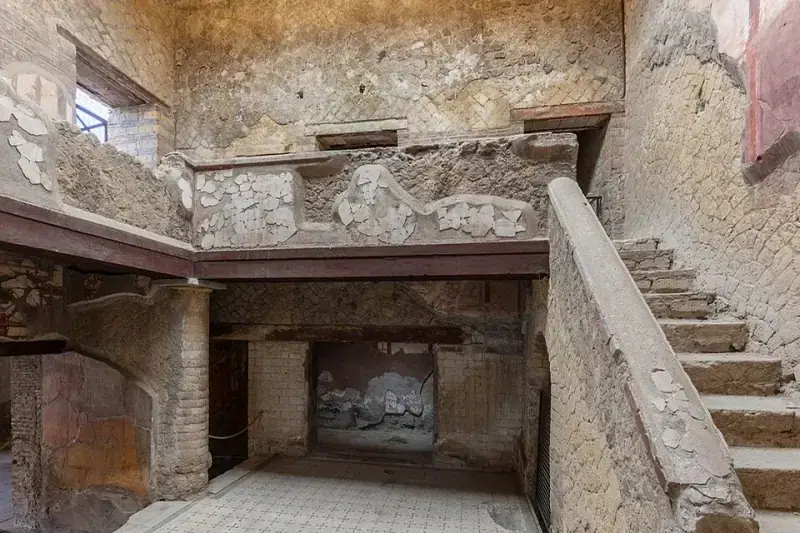
Compact excavated blocks, upper storeys and preserved organic materials complement Pompeii with a different view of Roman domestic life. Herculaneum was buried by the eruption of Vesuvius in 79 CE; volcanic deposits preserved buildings and organic materials to an unusual degree.
What you will see
- Surviving streets, structures or foundations.
- Interpretive areas that explain the site plan.
- Architectural details and material remains.
- Relationship between the ruins and the wider landscape.
History
Herculaneum was buried by the eruption of Vesuvius in 79 CE; volcanic deposits preserved buildings and organic materials to an unusual degree.
Visitor tips
- 1
Allow time to look at the surrounding settlement or landscape as well as the principal site, and check current access information before setting out.
About Campania
Naples and the Bay of Naples bring together dense urban history, exceptional Roman archaeological sites, royal architecture, island scenery and the cliff settlements of the Amalfi Coast.
Open the Italy guide