 Hiiumaa mudeliklubi · CC BY-SA 4.0
 Why visit
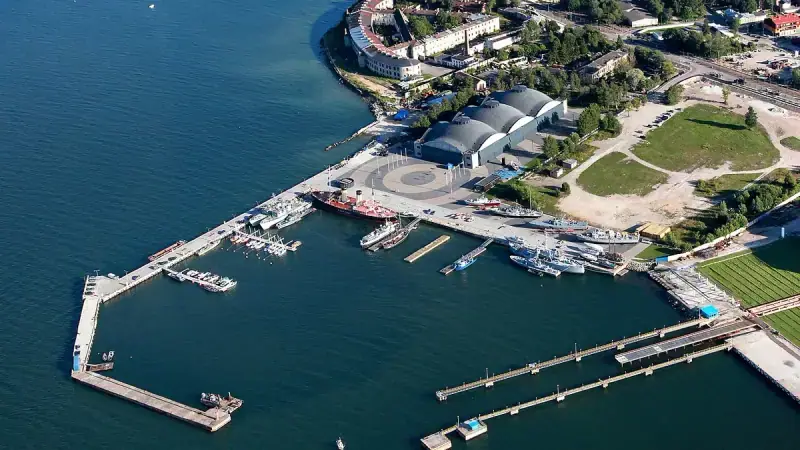
The Seaplane Harbour makes Estonia’s maritime history tangible through large-scale objects rather than display cases alone. Historic hangars contain submarines, boats, naval equipment and interactive interpretation, while the harbour setting connects the collection directly with Tallinn Bay. The architecture of the early concrete hangars is part of the experience. It is particularly useful for families and for travellers interested in engineering, military history or seafaring, and it adds an industrial-waterfront perspective that contrasts with the nearby Old Town.
What you will see
- historic seaplane hangars.
- submarine Lembit.
- boats and naval exhibits.
- harbour-side setting.
History
The reinforced-concrete seaplane hangars were built in the early twentieth century for naval aviation. The restored complex opened as a branch of the Estonian Maritime Museum in 2012 and became the principal home for several large maritime exhibits.
Visitor tips
- 1
Allow enough time to explore the setting rather than only the principal feature, and follow local signs where routes, protected areas or historic surfaces limit access.
About Tallinn & Harju
Estonia’s capital region combines the medieval city, imperial Kadriorg, maritime museums and accessible northern-coast nature. Short journeys east and west of Tallinn add waterfalls and open-air heritage.
Open the Estonia guide