 Mait Metsur / aerofotod.ee · CC BY-SA 4.0
 Why visit
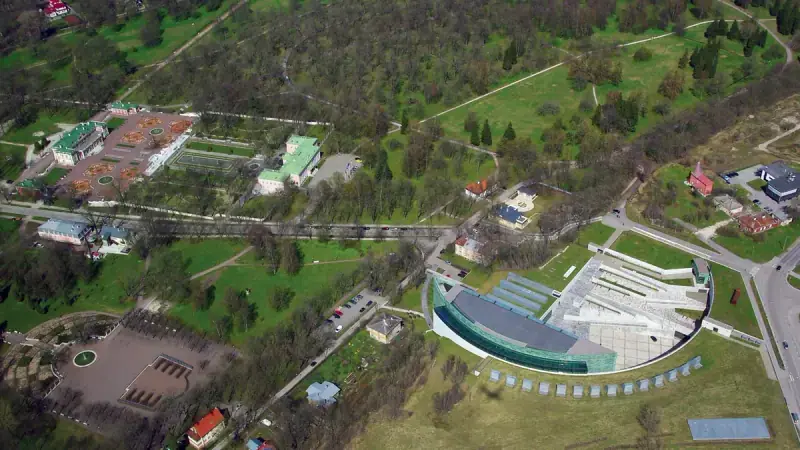
Kumu provides the broadest single overview of Estonian visual art and places it within the country’s changing political and social history. Permanent displays move from earlier Baltic-German and national art into twentieth-century work made under very different regimes, while temporary exhibitions widen the context. The contemporary building is also significant in its own right, cut into the limestone slope beside Kadriorg Park. It pairs naturally with Kadriorg Palace for a day that moves from imperial collections to modern Estonian culture.
What you will see
- Estonian art collection.
- twentieth-century galleries.
- temporary exhibitions.
- modern building beside Kadriorg Park.
History
Kumu opened in 2006 as the main building of the Art Museum of Estonia. The institution it belongs to was founded earlier, but the purpose-built Kadriorg site created a large permanent home for national art collections and exhibitions.
Visitor tips
- 1
Allow enough time to explore the setting rather than only the principal feature, and follow local signs where routes, protected areas or historic surfaces limit access.
About Tallinn & Harju
Estonia’s capital region combines the medieval city, imperial Kadriorg, maritime museums and accessible northern-coast nature. Short journeys east and west of Tallinn add waterfalls and open-air heritage.
Open the Estonia guide