 Ivar Leidus · CC BY-SA 3.0 EE
 Why visit
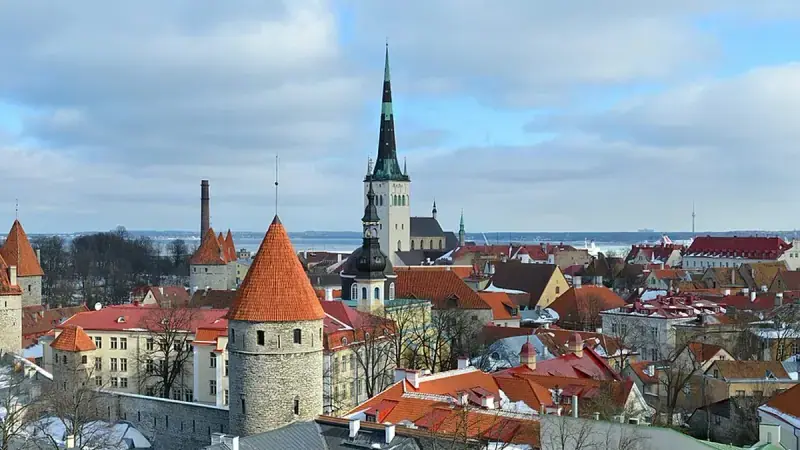
Toompea Castle shows the long continuity of political power on Tallinn’s upper town. Medieval walls and towers sit beside later administrative architecture, while the modern parliament occupies part of the complex. Even when interior access is limited, the exterior allows travellers to understand how successive Danish, German, Swedish, Russian and Estonian authorities used the same strategic hill. The nearby viewpoints and cathedral make the castle part of a compact group that explains Tallinn’s historical division between the upper and lower towns.
What you will see
- medieval wall and towers.
- parliament façade.
- upper-town courtyards and approaches.
- views towards the lower town.
History
Fortified structures occupied Toompea from the Middle Ages, and the complex was repeatedly altered under successive rulers. A Baroque and early Classical administrative wing was added during the Russian imperial period. The Riigikogu, Estonia’s parliament, now meets here.
Visitor tips
- 1
Allow enough time to explore the setting rather than only the principal feature, and follow local signs where routes, protected areas or historic surfaces limit access.
About Tallinn & Harju
Estonia’s capital region combines the medieval city, imperial Kadriorg, maritime museums and accessible northern-coast nature. Short journeys east and west of Tallinn add waterfalls and open-air heritage.
Open the Estonia guide