 Claus Ableiter · CC BY-SA 3.0
 Why visit
The monastery provides historical depth in a town better known for modern resort development. Its enclosed courtyard, stone arcades and older religious spaces create a quiet architectural core, and the contrast with surrounding streets makes the survival of the complex particularly legible. The stop works especially well when placed beside nearby sites from the same region, because the contrast in landscape, architecture or historical period makes the wider character of Cyprus easier to understand.
What you will see
- Stone courtyard.
- Arcaded buildings.
- Rock-cut elements.
- Old fig tree and central setting.
History
The monastery developed during the Venetian period, probably in the 15th and 16th centuries, around an older religious site. It later ceased functioning as a monastic community but remained an important landmark.
Visitor tips
- 1
Allow time for the surrounding landscape or historic streets where these form part of the site context.
- 2
Check current official information before relying on a particular entrance, service, crossing arrangement or interior visit.
About Cape Greco & Ayia Napa
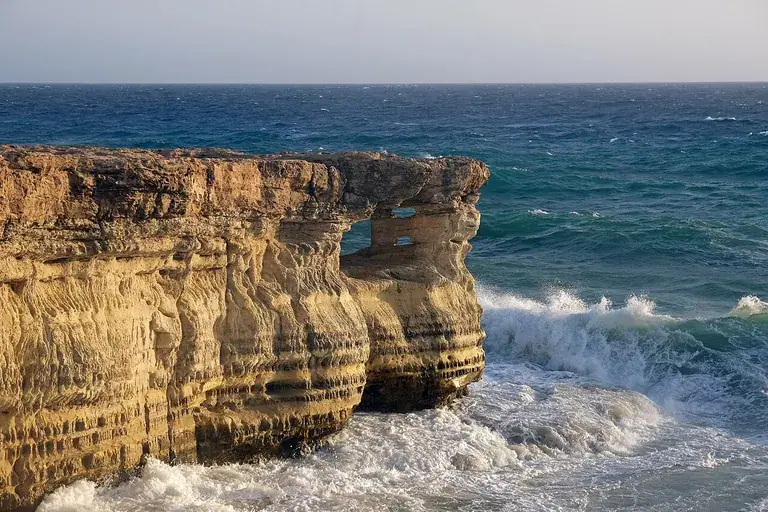
South-eastern Cyprus is shaped by limestone headlands, sheltered bays, sea caves and historic sites around Ayia Napa.
Open the Cyprus guide