 Dickelbers · CC BY-SA 3.0
 Why visit
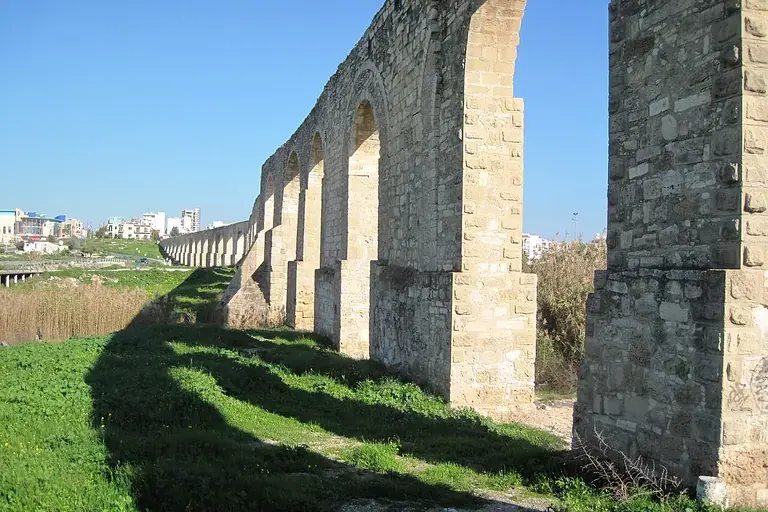
Kamares offers a piece of infrastructure history rather than a palace or sacred monument. The repeating arches show how water was carried towards the growing port city, and their open landscape setting makes the engineering form especially clear. It is a useful short stop for broadening Larnaca beyond its seafront and churches. The stop works especially well when placed beside nearby sites from the same region, because the contrast in landscape, architecture or historical period makes the wider character of Cyprus easier to understand.
What you will see
- Repeated stone arches.
- Long linear perspective.
- 18th-century engineering.
- Wetland-edge landscape.
History
The aqueduct was built in the 18th century under Bekir Pasha to improve Larnaca’s water supply. Sections of the arcaded structure remain visible across the flat landscape west of the city.
Visitor tips
- 1
Allow time for the surrounding landscape or historic streets where these form part of the site context.
- 2
Check current official information before relying on a particular entrance, service, crossing arrangement or interior visit.
About Larnaca & Lefkara
Larnaca and its hinterland combine wetland landscapes, historic churches, archaeology, mountain-edge villages and Ottoman-era engineering.
Open the Cyprus guide