 Jean-Pol GRANDMONT · CC BY 3.0
 Why visit
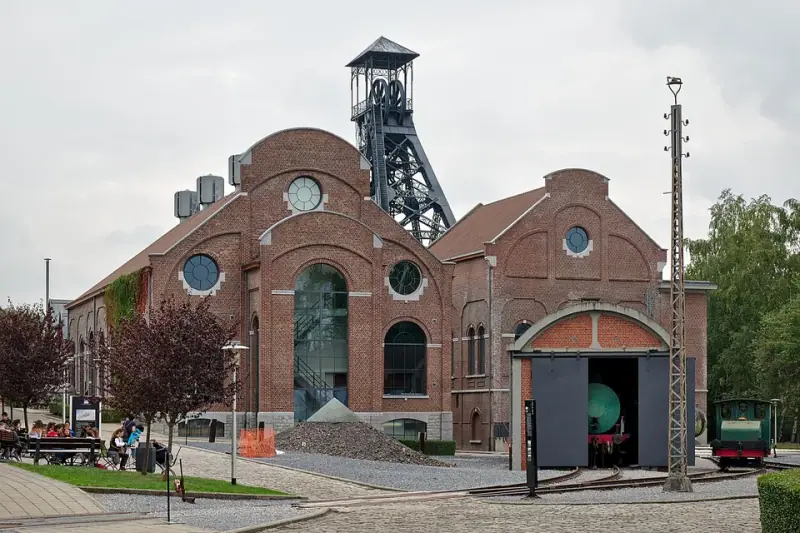
Neoclassical industrial buildings and workers' housing preserve an unusually coherent nineteenth-century coal-mining settlement, now reused for design and contemporary art. The visit is worthwhile because it brings several strands of Belgian history and landscape together in one clearly legible setting. Time on site can focus on neoclassical industrial courtyard, former workshops, workers' housing context, while the surrounding streets, grounds or scenery provide useful context. It works especially well as part of a regional itinerary because the place adds a distinct subject rather than repeating the experience of nearby attractions.
What you will see
- neoclassical industrial courtyard.
- former workshops.
- workers' housing context.
- design museum.
History
Grand-Hornu was developed in the early nineteenth century around coal mining by industrialist Henri De Gorge. Its planned industrial architecture later became part of the UNESCO-listed Major Mining Sites of Wallonia.
Visitor tips
- 1
Allow enough time to understand the surrounding setting as well as the principal feature, and follow local signs where historic surfaces, protected areas or active public spaces affect access.
About Hainaut
Hainaut's visitor landscape is shaped by medieval civic monuments, cathedrals, planned mining settlements, industrial memory and major historic estates.
Open the Belgium guide