 Krzysztof Golik · CC BY-SA 4.0
 Why visit
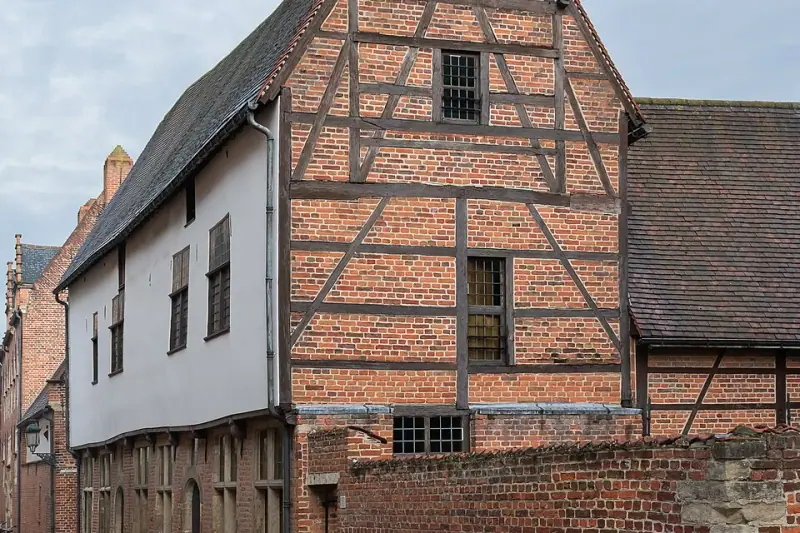
A compact district of brick houses, lanes, courtyards and bridges preserves the spatial character of a large Flemish beguinage while remaining integrated with Leuven's university life. The visit is worthwhile because it brings several strands of Belgian history and landscape together in one clearly legible setting. Time on site can focus on brick beguine houses, courtyards, Dijle channels, while the surrounding streets, grounds or scenery provide useful context. It works especially well as part of a regional itinerary because the place adds a distinct subject rather than repeating the experience of nearby attractions.
What you will see
- brick beguine houses.
- courtyards.
- Dijle channels.
- historic lanes.
History
The community has medieval origins and expanded significantly in the seventeenth century. KU Leuven acquired and restored the complex in the twentieth century, and it forms part of the UNESCO-listed Flemish beguinages.
Visitor tips
- 1
Allow enough time to understand the surrounding setting as well as the principal feature, and follow local signs where historic surfaces, protected areas or active public spaces affect access.
About Flemish Brabant
Flemish Brabant combines Leuven's university and Gothic heritage with the Sonian-forest fringe, historic estates and accessible woodland south and east of Brussels.
Open the Belgium guide