
The trip, in order
Follow the route day by day. Times and prices can change, so check official information before you travel.
Railways and the mining landscape
Fond-de-Gras
- 1
Minett Park Fond-de-Gras
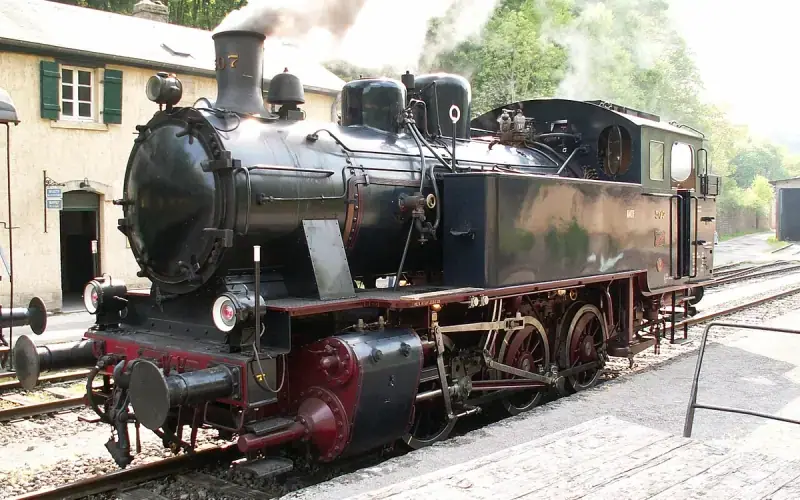
Fond-de-Gras is one of the strongest places to understand how iron ore, railways and heavy industry shaped southern Luxembourg. Historic rolling stock and former industrial buildings sit within the landscape where ore and workers once moved between mines and steelworks. Heritage train operations can add movement and sound to the site when running, while the wider park links industrial archaeology with woodland and former extraction areas. The experience complements the underground mine at Rumelange and the blast furnaces at Belval by showing the transport network that connected those parts of the industrial system.
- Duration
- 150 minutes suggested
- Price
- Check current official information
- Start time
- Choose a start time that suits your day.
Underground iron mining
Rumelange
- 1
National Mining Museum, Rumelange
The Rumelange mining museum takes industrial history underground. Entering former workings makes the scale, darkness and physical conditions of iron-ore extraction much easier to grasp than machinery displayed above ground. Mining equipment, transport systems and interpreted galleries show how workers removed and moved ore that fed Luxembourg’s steel industry. The site is especially useful in combination with Belval and Fond-de-Gras: together they trace extraction, transport and smelting as connected stages rather than isolated attractions. Underground access conditions make checking current visitor arrangements particularly important.
- Duration
- 120 minutes suggested
- Price
- Check current official information
- Start time
- Choose a start time that suits your day.
Steelworks, resistance and human rights
Esch-sur-Alzette
- 1
Belval Blast Furnaces
Belval makes Luxembourg’s industrial transition visible in a single urban landscape. Massive blast furnaces, pipework and associated steelworks structures remain beside new university, research and cultural buildings, so the site is not presented as an isolated ruin. Walking around the complex shows the physical scale of iron production and how former heavy-industry land has been reused. Where current access permits, elevated areas add a different perspective over the southern conurbation. The furnaces pair naturally with Rumelange and Fond-de-Gras for a fuller account of the Minett economy.
- Duration
- 90 minutes suggested
- Price
- Check current official information
- Start time
- Choose a start time that suits your day.
- 2
National Museum of Resistance and Human Rights
The museum approaches the Second World War from the perspective of society under occupation rather than primarily through military equipment. Displays address resistance, forced conscription, persecution, deportation and the choices faced by people living under Nazi rule, then extend the discussion towards memory and human rights. That focus complements the military museum at Diekirch and the American Cemetery. Its location in the industrial south also helps connect wartime history with the communities that grew around mines and steelworks, giving the Minett region a social as well as industrial narrative.
- Duration
- 105 minutes suggested
- Price
- Check current official information
- Start time
- Choose a start time that suits your day.