
The trip, in order
Follow the route day by day. Times and prices can change, so check official information before you travel.
Tara and Trim
Navan
- 1
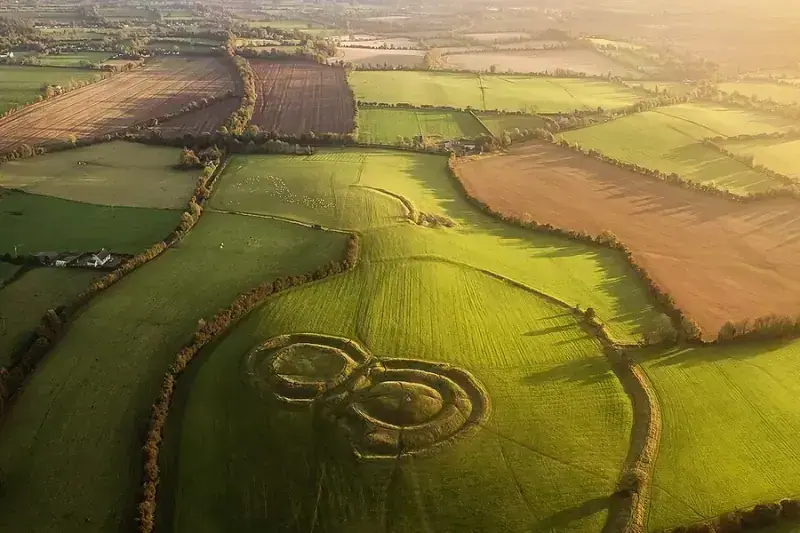
Hill of Tara
Hill of Tara is worth time because it is a ceremonial and political landscape of prehistoric and early historic earthworks on a long ridge in County Meath. The visit centres on ring earthworks, Mound of the Hostages, and Lia Fáil, so the place can be understood through visible features rather than reputation alone. Tara accumulated monuments over many centuries and became closely associated with traditions of Irish kingship and assembly. Within Boyne Valley & North-East, it adds a clear archaeology, prehistoric dimension to a broader itinerary. A measured visit leaves time to examine the building fabric, landscape or collections and to understand how the site relates to its immediate setting.
- Duration
- 120 minutes suggested
- Price
- Check current official information
- Start time
- Choose a start time that suits your day.
- 2
Trim Castle
Trim Castle is worth time because it is a large Anglo-Norman castle beside the River Boyne, dominated by a massive multi-sided keep. The visit centres on massive keep, curtain walls, and Boyne riverside setting, so the place can be understood through visible features rather than reputation alone. Construction began in the late twelfth century under Hugh de Lacy and his successors, creating a major fortress within the Anglo-Norman lordship of Meath. Within Boyne Valley & North-East, it adds a clear castles, heritage dimension to a broader itinerary. A measured visit leaves time to examine the building fabric, landscape or collections and to understand how the site relates to its immediate setting.
- Duration
- 120 minutes suggested
- Price
- Check current official information
- Start time
- Choose a start time that suits your day.
Loughcrew and Newgrange
Oldcastle
- 1
Loughcrew
Loughcrew is worth time because it is a hilltop complex of Neolithic passage tombs with carved stones and broad views across the Midlands. The visit centres on passage tomb cairns, megalithic art, and hilltop views, so the place can be understood through visible features rather than reputation alone. The cairns were constructed in the Neolithic period and form one of Ireland’s important groups of passage tombs. Within Boyne Valley & North-East, it adds a clear archaeology, prehistoric dimension to a broader itinerary. A measured visit leaves time to examine the building fabric, landscape or collections and to understand how the site relates to its immediate setting.
- Duration
- 120 minutes suggested
- Price
- Check current official information
- Start time
- Choose a start time that suits your day.
- 2
Newgrange
Newgrange is worth time because it is a monumental Neolithic passage tomb within the Brú na Bóinne World Heritage landscape. The visit centres on passage chamber, kerbstone art, and winter-solstice alignment, so the place can be understood through visible features rather than reputation alone. Newgrange was built around 3200 BC. Its passage and chamber are arranged so that winter-solstice sunrise light can enter the interior. Within Boyne Valley & North-East, it adds a clear unesco, archaeology dimension to a broader itinerary. A measured visit leaves time to examine the building fabric, landscape or collections and to understand how the site relates to its immediate setting.
- Duration
- 150 minutes suggested
- Price
- Check current official information
- Start time
- Choose a start time that suits your day.
Cistercian and early Christian sites
Drogheda
- 1
Mellifont Abbey
Mellifont Abbey is worth time because it is the ruins of Ireland’s first Cistercian abbey, laid out around a cloister in the Boyne Valley. The visit centres on octagonal lavabo remains, cloister plan, and chapter-house ruins, so the place can be understood through visible features rather than reputation alone. Mellifont was founded in 1142 and introduced Cistercian monastic planning and architecture on a major scale in medieval Ireland. Within Boyne Valley & North-East, it adds a clear abbeys, heritage dimension to a broader itinerary. A measured visit leaves time to examine the building fabric, landscape or collections and to understand how the site relates to its immediate setting.
- Duration
- 90 minutes suggested
- Price
- Check current official information
- Start time
- Choose a start time that suits your day.
- 2
Monasterboice
Monasterboice is worth time because it is an early Christian monastic site with a tall round tower and exceptional carved high crosses. The visit centres on Muiredach’s High Cross, round tower, and West Cross, so the place can be understood through visible features rather than reputation alone. The monastery was founded in the early medieval period and became an important religious centre; its surviving high crosses date from around the tenth century. Within Boyne Valley & North-East, it adds a clear monastic, heritage dimension to a broader itinerary. A measured visit leaves time to examine the building fabric, landscape or collections and to understand how the site relates to its immediate setting.
- Duration
- 90 minutes suggested
- Price
- Check current official information
- Start time
- Choose a start time that suits your day.