
The trip, in order
Follow the route day by day. Times and prices can change, so check official information before you travel.
Abrittus and Sveshtari
Razgrad
- 1
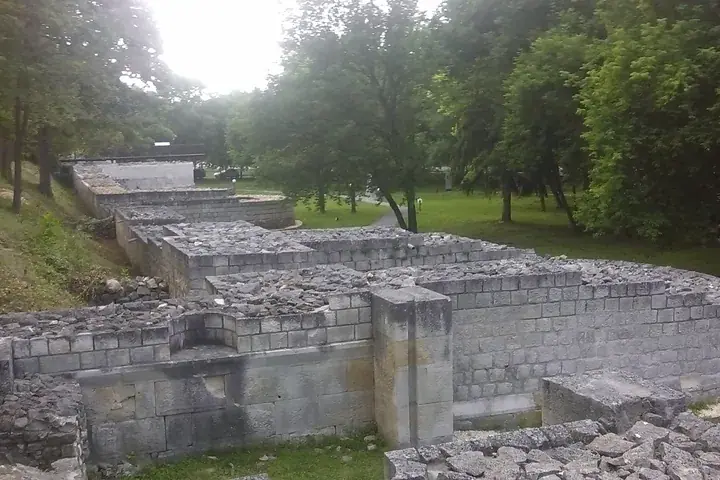
Abrittus Archaeological Reserve
Abrittus adds a substantial Roman urban site to a region better known for early Bulgarian capitals. Street lines, building foundations and fortifications make the ancient city easier to visualise than isolated finds, while the association with the battle of AD 251 places the site within a wider history of frontier pressure on the Roman Empire. The reserve provides useful chronological context before visiting Pliska, Madara and Preslav, which belong to a much later political landscape.
- Duration
- 120 minutes suggested
- Price
- Check the current official visitor information before travel.
- Start time
- Choose a start time that suits your day.
- 2
Thracian Tomb of Sveshtari
Sveshtari is especially important because the burial chamber preserves sculpture as part of its architecture. The standing female figures and painted details demonstrate how local Thracian traditions interacted with wider Hellenistic artistic forms. The tomb also sits within a broader archaeological landscape, so it is best understood as part of an elite burial and settlement system rather than an isolated monument. Controlled access protects the fragile interior, making current visitor arrangements essential to confirm.
- Duration
- 90 minutes suggested
- Price
- Check the current official visitor information before travel.
- Start time
- Choose a start time that suits your day.
Shumen Plateau
Shumen
- 1
Shumen Fortress
Shumen Fortress reveals continuity across several political periods in northeastern Bulgaria. Its walls and internal building remains show that this was not only a military outpost but also a substantial medieval settlement. The plateau position explains its defensive value and gives broad views towards the region of Pliska, Madara and Preslav. As a result, the site works well as a geographical and chronological bridge between ancient settlement and the first Bulgarian capitals.
- Duration
- 120 minutes suggested
- Price
- Check the current official visitor information before travel.
- Start time
- Choose a start time that suits your day.
- 2
Founders of the Bulgarian State Monument
The Founders monument is important as an interpretation of medieval history created in the late socialist period. Its huge concrete figures and mosaics do not attempt archaeological reconstruction; instead, they present a deliberately symbolic national narrative. This makes the complex valuable alongside nearby Pliska and Preslav, where original archaeological remains survive. Comparing them shows how early Bulgarian history has been studied, preserved and commemorated in very different forms across the same region.
- Duration
- 120 minutes suggested
- Price
- Check the current official visitor information before travel.
- Start time
- Choose a start time that suits your day.
Pliska and Madara
Pliska
- 1
Pliska National Historical-Archaeological Reserve
Pliska is essential for understanding how the early Bulgarian state organised power on the ground. The scale of the fortified area is striking and differs from compact hilltop citadels such as Tsarevets. Palace remains, walls and the Great Basilica trace the transition from an early steppe-influenced ruling centre to a Christian monarchy. The open archaeological landscape also makes distance and spatial organisation part of the visit, rather than reducing the capital to a single reconstructed building.
- Duration
- 120 minutes suggested
- Price
- Check the current official visitor information before travel.
- Start time
- Choose a start time that suits your day.
- 2
Madara National Historical-Archaeological Reserve
Madara combines symbolic art, inscriptions and a dramatic natural setting. The Rider is not a freestanding monument but part of a cliff landscape that also contains caves and archaeological remains from multiple periods. Its inscriptions provide rare direct evidence linked with early Bulgarian rulers, making the site especially valuable between Pliska and Preslav. The vertical rock face also explains why the monument has become one of the country’s most recognisable historical images.
- Duration
- 120 minutes suggested
- Price
- Check the current official visitor information before travel.
- Start time
- Choose a start time that suits your day.
Veliki Preslav
Veliki Preslav
- 1
Veliki Preslav National Historical-Archaeological Reserve
Veliki Preslav shows a more architecturally elaborate phase of the First Bulgarian Empire than Pliska. Church foundations, palace areas and evidence of specialised workshops reflect a capital closely connected with Christian court culture and literary production. The site is especially useful after Madara and Pliska because all three places are geographically close but express different functions of early medieval power. Museum material helps restore colour and detail to foundations that are otherwise low and fragmentary.
- Duration
- 120 minutes suggested
- Price
- Check the current official visitor information before travel.
- Start time
- Choose a start time that suits your day.